Monday, February 11, 2008

Real Life Bangalore

The last post i was talk about my 1st time i came to india okay this time i want to bring my life to tell anyguy...

Now i'm so happy i got 5-6 indian friends some guy are good some guy almost great,, However don't trust indian people 'cause i cognize almost all are tricky faked and scamer!! but not all some guy you can go with them.

After yesterday i came to Vidhana Soudha in Bangalore there's nice place at night!! i did take photo and informations to member!

Vidhana SoudhaVidhana Soudha

Located 1000m above sea level, the capital of the state of Karnataka, Bangalore, is a vibrant cosmopolitan city, a major industrial and commercial centre of the country.The city was founded by Kempe Gowda in the early 16th century. Two centuries later, it became an important fortress city under Hyder Ali and Tipu Sultan. The ruins of those periods can still be seen on the Bellary Road, at Lal Bagh, Ulsoor and Gavi Gangadhareswar Temple.

Bangalore is known as the Silicon Valley of the country, the nerve - centre of India's software industry. Its other major industries include aircraft, electronics and machine tools. Despite being one of Asia's fastest growing cities, Bangalore remains one of the most elegant metropolises in India. A well - planned city, with tree - lined avenues, a large number of parks, gardens and lakes, Bangalore is aptly called India's garden city. The city attracts people in large numbers, from all over the country, and abroad, who come to look for better job opportunities, and higher education. Surprisingly, all this frantic industrial expansion and increase in the population, has not robbed Bangalore of its essential old-world appeal. It is, in the true sense, a very 'happening' city.


What to See

The Vidhana Soudha is one of the most splendid architectural creations, India can boast of. Located at the north - west end of Cubbon Park, it is a granite structure built in the neo - Dravidian style of architecture. Conceived and executed by Kengak Hanumanthaiya, the then Chief Minister, it houses both the State Legislature and Secretariat.

Bangalore is also famous for its fine sprawling gardens, the notable amongst them being the Lal Bagh and Cubbon Park.The Lal Bagh, was laid out in the 18th century by Hyder Ali and his son, Tipu Sultan. Spread over an area of 240 acres, the park contains a variety of plants and trees, a deer park, and one of the largest collections of rare tropical and sub - tropical plants, in the country. The Glass House, a huge conservatory, a later addition, is the venue of the annual flower, vegetable and fruit shows.

The Cubbon Park, laid out in 1864, a brainchild of the British, covers an area of 300 acres. Within its premises are the Public Library, the High Court, the Government Museum and the Visveswaraiah Technological & Industrial Museum. The Attara Kacheri, as the High Court building is known in these parts, was built in 1864. The Government Museum, one of the oldest in India, came into being in 1886, and houses collections of coins, art, relics from the Mohenjodaro and also, some pieces from Halebid and Vijayanagar. Located near the City Market, are the remains of a fort dating back to the days of Hyder Ali, and also, Tipu Sultan's summer palace. The palace, an elaborately decorated structure, has ornate arches and minarets. A museum within, has on display, the life and times of Tipu Sultan and Hyder Ali.

Bangalore boasts of some of the oldest, and most beautiful temples in the country. Adjoining Tipu's summer palace is the Venkataramanaswamy Temple, a 300 year old temple built by the Wodeyars, which is still in very good condition. South of Bangalore, in Basavangudi, is the Bull Temple, built by Kempe Gowda. The deity is a massive 15 foot Basava or bull, which has been carved from a single boulder. Another impressive temple is the Gavi Gangadhareswara temple, an unusual cave temple. It has been designed in such a manner so that, on the festival of Sankranti, the rays of the sun pass between the horns of a Nandi Bull placed outside the temple, and thereby, illuminate the image of Lord Shiva. Another temple dedicated to Lord Shiva is the Someshwara Temple, built by Kempe Gowda, in Ulsoor.

The city also has its share of pleasant lakes, the principal amongst them being, the Ulsoor Lake, which also has boating facilities. The other lakes around Bangalore are the Sankey Tank, the Yediyur Tank and the Lal Bagh Lake.


Around Bangalore

35 km from Bangalore, at Hesaraghatta, is the famous Nritya Gram, a centre for dance that imparts extensive training in seven dance disciplines and two martial art forms, to residential students. The village is rustic in design, and blends with the bucolic surroundings. The Hesaraghatta Lake, a man - made lake, near the village is also a popular tourist spot. Just 21 km from the city, and easily accessible by road is the Bannerghatta National Park. A part of the Bannerghatta forest, the Park houses a mini zoo, a crocodile farm, lion and tiger safari parks.

Situated 60 km from Bangalore, at a height of 1478 m above sea level, is the Nandi Hills resort. What used to be the favourite summer getaway of Tipu Sultan, is now a popular picnic spot with its awesome fort, sprawling lawns and two ancient temples. A little away from the city is Ramohali, a picturesque picnic spot, that boasts of a 400 year old banyan tree, that spreads for over 4 acres. It is believed to be the site of sage Muneshwara's penance.

The region around Bangalore is dotted with gigantic rock formations, the two notable amongst them being Shivaganga (4599 ft.high) and Savandurga. The latter used to be a fortress and the hideout of Kempe Gowda.

Mysore is just 139 km by road from the city. It was the capital city of Hyder Ali, Tipu Sultan and the entire Wodeyar clan. Mysore's prime attractions are the Mysore Palace, the Chamundi Hills, the famous Brindavan Gardens, the Jayachamarajendra Art Gallery which is located in the Jaganmohan Palace, the Mysore Zoo and St. Philomena's Church. 15 km from Mysore is the old capital of Tipu Sultan, Srirangapatna . Its fort bears witness to the Tiger of Mysore's last battle against the British. His mausoleum, the Gumbaz, which sports ivory inlaid doors and the famous tiger - striped emblem is also nearby. Near Srirangapatna is the Ranganathittu Bird Sanctuary. 40 km away from Mysore is the Somnathpur Temple, a star - shaped structure built in 1260 A.D, an outstanding example of Hoysala architecture.


Festival

The Karaga Festival that comes around in March/April, is celebrated with great pomp and show, at the Dharmaraya Temple. The Karaga, an earthen pot that stands for the goddess Shakti, is taken out in a procession at night. The pot is immersed in the Sampangi Tank, which is 20 km from the city.


How to Get There

Bangalore is well connected to all the major cities of the country, by air, rail and road.


Where to Stay

Some of the hotels available for accomodation in the city are: Taj Residency, The Oberoi, West End Hotel, Hotel Ashok and Hotel New Victoria.

Wednesday, January 16, 2008

The First Time I Came To India


I could remember that, First time I had a problem with my life so I have to go to the another country, Sure I'm from Thailand. I never hate my country! but just met a big problem.

First time i arrived to Bangalore India by Nok Air when i came i feel differ with Thailand too much. I met many body black skin big eyes and crank English accent. and I camp with my sister who was my cousin friend. Them very friendly when met me helpful anythings. so I got the room for live.

I have some photo i taked when i arrived there the first time.


This place is my college.


View of bangalore nere Padmanabha nagar


India ancient of day


My Flat around Padmanabha nagar


Ok next time i'll countinue present.

India History

Paintings at the Ajanta Caves in Aurangabad, Maharashtra, 6th century.

Stone Age rock shelters with paintings at the Rock Shelters of Bhimbetka in Madhya Pradesh are the earliest known traces of human life in India. The first known permanent settlements appeared over 9,000 years ago and gradually developed into the Indus Valley Civilization,[23] dating back to 3300 BCE in western India. It was followed by the Vedic Civilization, which laid the foundations of Hinduism and other cultural aspects of early Indian society. From around 550 BCE, many independent kingdoms and republics known as the Mahajanapadas were established across the country.

The empire built by the Maurya dynasty under Emperor Ashoka united most of South Asia in the third century BCE.[25] From 180 BCE, a series of invasions from Central Asia followed, including those led by the Indo-Greeks, Indo-Scythians, Indo-Parthians and Kushans in the north-western Indian subcontinent. From the third century CE, the Gupta dynasty oversaw the period referred to as ancient "India's Golden Age."[26][27] Among the notable South Indian empires were the Chalukyas, Rashtrakutas, Hoysalas, Pallavas, Pandyas, and Cholas. Science, engineering, art, literature, astronomy, and philosophy flourished under the patronage of these kings.
Mahatma Gandhi (right) with Jawaharlal Nehru, 1937. Nehru would go on to become India's first prime minister in 1947.


Following invasions from Central Asia between the tenth and twelfth centuries, much of north India came under the rule of the Delhi Sultanate, and later the Mughal dynasty. Mughal emperors gradually expanded their kingdoms to cover large parts of the subcontinent. Nevertheless, several indigenous kingdoms, such as the Vijayanagara Empire, flourished, especially in the south. In the seventeenth and eighteenth century, the Mughal supremacy declined and the Maratha Empire became the dominant power. From the sixteenth century, several European countries, including Portugal, Netherlands, France, and the United Kingdom, started arriving as traders and later took advantage of the fractious nature of relations between the kingdoms to establish colonies in the country. By 1856, most of India was under the control of the British East India Company.[28] A year later, a nationwide insurrection of rebelling military units and kingdoms, variously referred to as the First War of Indian Independence or Sepoy Mutiny, seriously challenged British rule but eventually failed. As a consequence, India came under the direct control of the British Crown as a colony of the British Empire.

During the first half of the twentieth century, a nationwide struggle for independence was launched by the Indian National Congress and other political organizations. In 1909, an Indian studying at University College London, Madhanlal Dhingra, assassinated in London Sir William Hutt Curzon Wyllie, the political ADC to Secretary of State for India Lord Hamilton. In the 1920s and 1930, a movement led by Mahatma Gandhi, and displaying commitment to ahimsa, or non-violence, millions of protesters engaged in mass campaigns of civil disobedience.[29] Finally, on 15 August 1947, India gained independence from British rule, but was partitioned, in accordance to wishes of the Muslim League, along the lines of religion to create the Islamic nation-state of Pakistan.[30] Three years later, on 26 January 1950, India became a republic and a new constitution came into effect.[8]

Since independence, India has experienced sectarian violence and insurgencies in various parts of the country, but has maintained its unity and democracy. It has unresolved territorial disputes with China, which in 1962 escalated into the brief Sino-Indian War; and with Pakistan, which resulted in wars in 1947, 1965, 1971, and 1999. India is a founding member of the Non-Aligned Movement and the United Nations (as part of British India). In 1974, India conducted an underground nuclear test.[31] This was followed by five more tests in 1998, making India a nuclear state.[31] Beginning in 1991, significant economic reforms[32] have transformed India into one of the fastest-growing economies in the world.


India Profile

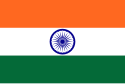
Flag of India
Emblem of India
India
(Hindi: भारत Bhārat), officially the Republic of India (Hindi: भारत गणराज्य Bhārat Gaṇarājya), is a sovereign nation in South Asia. It is the seventh largest country by geographical area, the second most populous country, and the most populous democracy in the world.[13] Bounded by the Indian Ocean on the south, the Arabian Sea on the west, and the Bay of Bengal on the east, India has a coastline of 7,517 kilometers (4,671 mi).[14] It borders Pakistan to the west;[15] China, Nepal, and Bhutan to the north-east; and Bangladesh and Burma to the east. In the Indian Ocean, India is in the vicinity of Sri Lanka, Maldives, and Indonesia.

Home to the Indus Valley civilization and a region of historic trade routes and vast empires, the Indian subcontinent was identified with its commercial and cultural wealth for much of its long history.[16] Four major world religions, Hinduism, Buddhism, Jainism and Sikhism originated here, while Zoroastrianism, Judaism, Christianity and Islam arrived in the first millennium CE and shaped the region's diverse culture. Gradually annexed by the British East India Company from the early eighteenth century and colonized by the United Kingdom from the mid-nineteenth century, India became a modern nation-state in 1947 after a struggle for independence that was marked by widespread nonviolent resistance.

India is the world's twelfth largest economy at market exchange rates and the third largest economy in purchasing power. Economic reforms have transformed it into the second fastest growing large economy;[17] however, it still suffers from high levels of poverty,[18] illiteracy, malnutrition and environmental degradation. A pluralistic, multi-lingual, and multi-ethnic society, India is also home to a diversity of wildlife in a variety of protected habitats.

Location of India


Etymology
Main article: Etymology of the names of India
The name India (pronounced /ˈɪndiə/) is derived from Indus, which is derived from the Old Persian word Hindu, from Sanskrit Sindhu, the historic local appellation for the Indus River.[19] The ancient Greeks referred to the Indians as Indoi, the people of the Indus.[20] The Constitution of India and common usage in various Indian languages also recognise Bharat (pronunciation (help·info), /bʰɑːrət̪/) as an official name of equal status.[21] Hindustan (/hin̪d̪ust̪ɑːn/ (info)), which is the Persian word for “Land of the Hindus” and historically referred to northern India, is also occasionally used as a synonym for all of India.